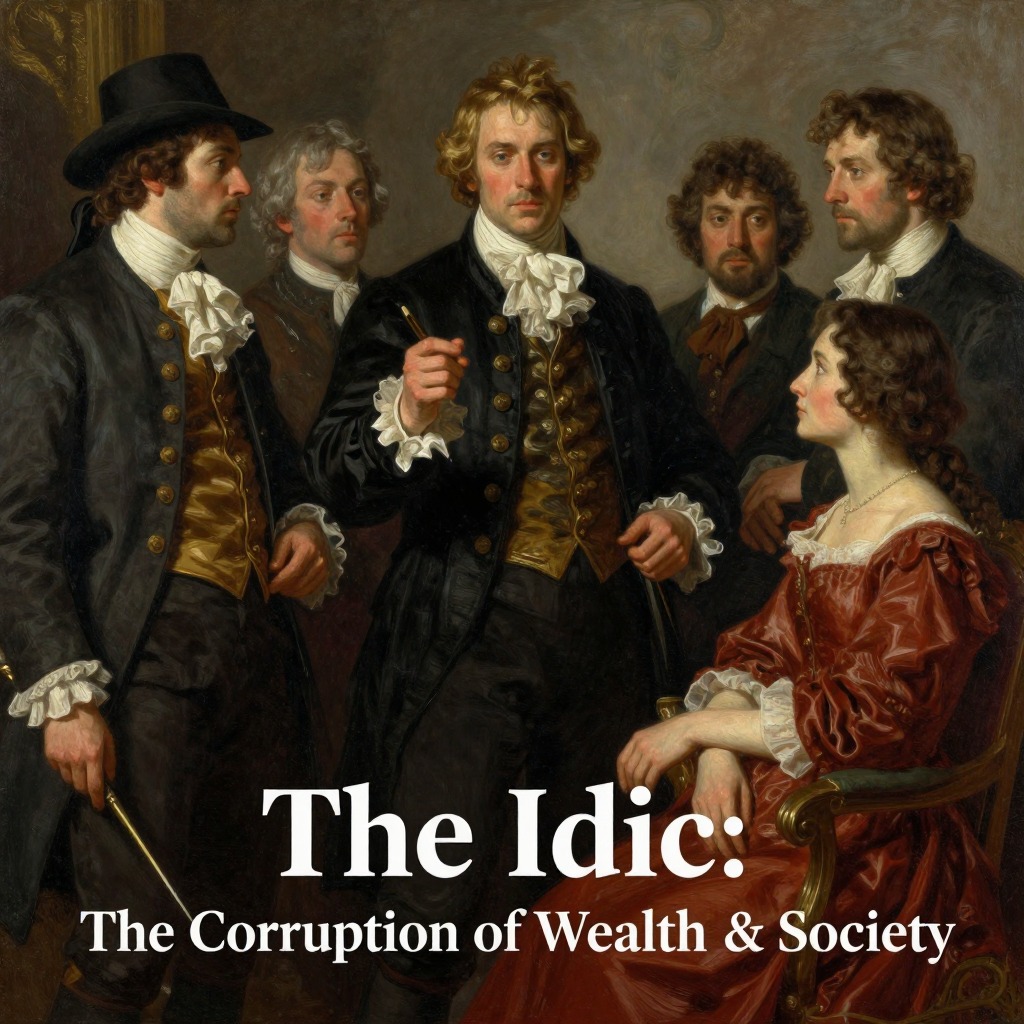
burning of the money
The burning of the money is the most concentrated symbolic act in Dostoevsky's novel, a scene in which Nastasia Philipovna Barashkoff seizes the hundred thousand roubles that Parfen Rogojin has brought as a bride-price and throws the packet into the fireplace, daring Gavrila Ardalionovitch Ivolgin to pull it out with his bare hands. The act is at once a repudiation of the mercenary logic that has governed her life, a theatrical assertion of her freedom, and a cruel test of Gania's character. It is the moment toward which the entire first part of the novel has been building, and it leaves every major relationship transformed.
The Money and Its Meaning
The hundred thousand roubles that Rogojin throws onto the table at Nastasia's birthday party are the culmination of a day-long bidding war for her person. Earlier that same afternoon, at Gania's apartment, Rogojin had offered first eighteen thousand, then forty thousand, and finally shouted that he would bring a hundred thousand by evening . The sum is grotesquely large—Rogojin's father had left two and a half million roubles, but the hundred thousand represents nearly all the liquid cash Rogojin's associates can scrape together at ruinous interest rates . Nastasia herself has just refused Totski's seventy-five thousand roubles as compensation for her ruined life, declaring herself free for the first time in nine years and three months . The packet of notes, wrapped in newspaper and tied with string, sits on the table as a physical embodiment of the market logic that has reduced her to a commodity—first Totski's kept woman, then Gania's ticket to fortune, now Rogojin's purchased bride.
The Challenge and the Fire
After Prince Muishkin's unexpected proposal and the revelation that he may inherit a fortune, Nastasia's mood swings violently between exaltation and despair. She announces that she will not ruin the prince by marrying him, and instead turns to Rogojin: "Come along, Rogojin, get your money ready!" . But before leaving, she seizes the packet and addresses Gania directly. She tells him she wants to look into his heart one last time, and declares that she will throw the hundred thousand roubles into the fire: "As soon as the fire catches hold of it, you put your hands into the fire and pick it out—without gloves, you know. You must have bare hands, and you must turn your sleeves up. Pull it out, I say, and it's all yours" . She rakes the logs together with a poker, and when a tongue of flame bursts out, she throws the packet onto it . The room gasps; some cross themselves . Lebedeff falls on his knees, lamenting his lame wife and thirteen children, and begs to be allowed to retrieve the money himself .
Gania's Paralysis and the Spectators
Gania stands motionless before the fire, his white gloves and hat in hand, a meaningless smile on his death-like lips . The crowd parts around him, leaving him face to face with Nastasia three paces from the flames. He does not move. Something new seems to have been born in his soul—as though he were vowing to himself that he would bear this trial . The fire, choked between two smouldering logs, dies down for a moment, then a tongue of flame licks the paper from below, mounts the sides of the parcel, and the whole packet bursts into flames . Ferdishenko shrieks at Gania to act; another man shouts that he would pull it out with his teeth for a thousand roubles . Gania hurls Ferdishenko away, turns toward the door, takes two steps, and faints . Nastasia then takes the tongs and fishes the packet out of the fire; the outer covering is burned away, but the notes inside are nearly untouched, protected by a threefold wrapping of newspaper . She places the packet beside the unconscious Gania and declares that the money is his—a recompense for his self-restraint in not retrieving it .
Consequences and Significance
The burning of the money is Nastasia's final, definitive rejection of the marriage market that has defined her existence. By throwing away a fortune, she proves that she values her freedom—or her capacity for self-destruction—more than any price. The act also destroys any possibility of a conventional resolution: she leaves with Rogojin that night, and the prince, who has just proposed to her, follows in pursuit . For Gania, the test reveals both his greed and his residual pride: he cannot bring himself to grovel for the money, but the effort of restraint breaks him physically. The singed packet becomes a permanent emblem of his humiliation and his narrow moral escape. The scene reverberates through the rest of the novel: Rogojin's purchase of Nastasia is never consummated in marriage, and the hundred thousand roubles, though saved from the fire, cannot save anyone from the tragedy that follows. The burning of the money stands as the novel's most vivid image of the destructive power of wealth when it becomes a substitute for love, dignity, and human connection.